Introduction
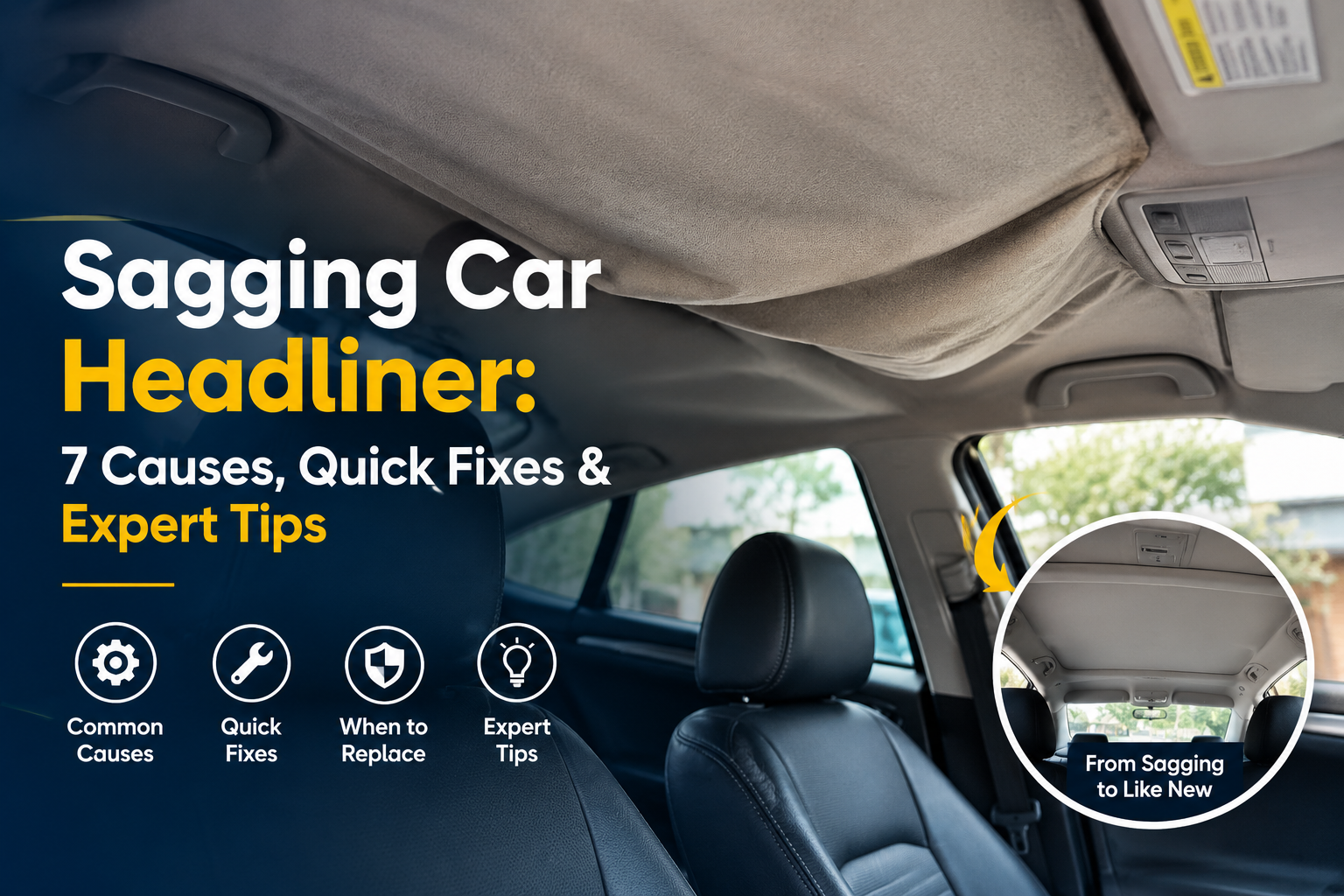
A sagging roof liner is one of those car problems that can start small and quickly become impossible to ignore. You may notice a small section of fabric coming loose near the sun visor, above the back seat, or around the edges of the roof. Over time, that loose fabric can spread across the entire ceiling.
So, why is my headliner falling down?
In most vehicles, the problem is not simply that the fabric has become loose. The adhesive and foam backing underneath the fabric can deteriorate because of age, heat, moisture, and everyday wear. Once the foam breaks down, the fabric loses its support and begins to sag.
A sagging car headliner can make an otherwise well-maintained vehicle look old and neglected. It can also become a visibility or driving distraction if the material hangs too low.
The good news is that a sagging headliner is often repairable. Depending on the condition of the fabric, foam, backing board, and surrounding components, you may be able to repair a small area or replace the entire headliner for a cleaner and longer-lasting result.
Table of Contents
What Causes a Sagging Car Headliner?
Understanding what causes a sagging car headliner can help you decide whether a temporary repair is appropriate or whether professional attention is needed.
1. Age and Adhesive Failure
One of the most common causes is simply age.
The adhesive used to bond the headliner fabric to its backing material does not last forever. After years of temperature changes and regular use, the adhesive can lose its strength.
When this happens, the fabric may begin separating from the backing board.
You might first notice:
- A small bubble in the fabric
- Loose material around the edges
- Wrinkles across the roof
- Fabric hanging near a sun visor
- A larger section dropping behind the rear seats
Once separation starts, it often continues to spread.
2. Heat and Temperature Changes
Vehicle interiors can become extremely hot when a car is parked in direct sunlight. Repeated heating and cooling can put stress on adhesives, foam, and upholstery materials.
This is especially important for vehicles that spend a lot of time outdoors.
Over several years, repeated exposure to high temperatures can cause the foam backing to break down and the adhesive to weaken. Eventually, the material can no longer stay securely attached.
3. Deteriorating Foam Backing
Many automotive headliners consist of fabric bonded to a thin foam layer, which is then attached to a rigid backing board.
With age, that foam can become brittle and deteriorate.
Once the foam turns into a powder-like material, simply applying new adhesive over the old surface may not produce a durable result. The deteriorated material can prevent proper bonding.
This is one reason professional headliner repair often involves removing the old material and preparing the backing correctly before installing new fabric.
4. Moisture and Water Leaks
Water damage can also contribute to headliner problems.
A leaking sunroof, windshield seal, roof antenna, or other area around the roof can allow moisture to reach the headliner.
Signs of possible moisture damage include:
- Water stains
- Discoloration
- A musty smell
- Damp upholstery
- Sagging in one specific area
- Rust or corrosion around nearby components
If your headliner suddenly begins sagging after a water leak, fixing the underlying leak should be part of the repair.
5. Previous Repairs or Poor Installation
A headliner can also fail because of an earlier repair that was not completed correctly.
Using the wrong adhesive, failing to remove deteriorated foam, stretching the fabric improperly, or using unsuitable materials can cause the fabric to separate again.
A professional installation focuses not only on making the headliner look good but also on preparing the surfaces and materials correctly.
How to Tell If Your Headliner Needs Repair or Replacement
Not every sagging headliner requires a complete replacement.
The best solution depends on the size and severity of the damage.
Small Localized Sagging
If only a very small section has started to loosen and the surrounding material is still in good condition, a repair may be possible.
For example, a small loose edge near a trim piece may be easier to correct than a headliner that is sagging across most of the roof.
Widespread Sagging
If large portions of the roof fabric are hanging down, the problem is likely more extensive.
When the foam backing has deteriorated across the entire headliner board, trying to repair individual areas may only provide a short-term solution.
In this situation, headliner replacement or complete reupholstery is often the more practical approach.
Damaged or Stained Fabric
Sometimes the adhesive is not the only problem.
Headliner fabric can become:
- Stained
- Faded
- Torn
- Discolored
- Worn from previous repairs
If your vehicle’s interior has other damaged upholstery as well, you may also want to consider professional leather car seat repair in Oshawa Ontario to restore worn, cracked, or damaged seating surfaces.
Damaged Backing Board
The rigid headliner board should also be inspected.
If it is cracked, badly warped, or otherwise damaged, simply replacing the fabric may not solve the problem. A technician can determine whether the board can be repaired or whether additional work is necessary.
Quick Fixes for a Sagging Car Headliner: What Works and What Doesn’t
When your headliner starts falling, it can be tempting to look for a five-minute DIY solution. Some temporary fixes can hold a small section in place, but they are not always appropriate for a long-term repair.
Temporary Pins or Clips
Pins may keep loose fabric away from your face temporarily, but they do not repair the underlying problem.
They can also create visible marks and may damage the fabric or backing.
Spray Adhesive
Spray adhesive is sometimes suggested as a DIY solution, but success depends heavily on the condition of the existing foam, the adhesive, the fabric, and the backing board.
Spraying adhesive over deteriorated foam may not provide a lasting bond.
Staples
Stapling fabric to the headliner board may hold it in place, but it can create an unfinished appearance and potentially damage components located above the headliner.
Modern vehicles can have wiring, sensors, lighting components, and airbag systems around the roof area. For that reason, drilling, stapling, or installing fasteners without knowing what is behind the headliner is not recommended.
Professional Repair
A professional headliner repair can address the actual cause rather than simply holding the fabric up temporarily.
Depending on the vehicle, the process may include removing the headliner, stripping deteriorated foam, preparing the backing board, fitting new material, trimming the openings correctly, and reinstalling the assembly.
The result should look neat and integrated with the rest of the interior.
Common Mistakes to Avoid With a Sagging Car Headliner
Many headliner problems become more difficult or expensive because the initial repair is delayed or handled incorrectly.
Ignoring the Problem
A small sag can spread. Waiting until most of the fabric has detached may turn a minor issue into a complete headliner project.
Using Household Glue
Household glue is not necessarily designed for automotive temperatures and upholstery materials.
A vehicle interior experiences conditions that can be very different from those inside a home. An adhesive that works on a household project may soften, stain, or fail inside a vehicle.
Gluing Over Old Foam
This is one of the biggest mistakes.
If the foam backing is already deteriorated, applying adhesive directly over it can produce a weak bond. Proper preparation is important for a durable result.
Choosing the Cheapest Material
Headliner fabric needs to be appropriate for automotive use. Material selection affects appearance, fit, durability, and the overall quality of the finished repair.
Forgetting About Roof Components
The headliner is more than a piece of fabric.
Depending on the vehicle, the area can contain lighting, wiring, sensors, grab handles, sunroof components, and safety-system components. Careful removal and reinstallation are important.
How to Prevent Headliner Problems in the Future
You cannot prevent every headliner failure, particularly in an older vehicle, but good interior care can help reduce unnecessary wear.
Park in the Shade When Possible
Reducing direct exposure to intense sunlight can help limit heat buildup inside the vehicle.
A windshield sunshade can also help reduce interior temperatures when the vehicle is parked.
Address Water Leaks Quickly
If you notice water around the roof, sunroof, windshield, or headliner, investigate the cause as soon as possible.
Continued moisture exposure can damage more than the fabric.
Avoid Pulling on Loose Fabric
Once your headliner begins separating, repeatedly pulling or pushing the fabric can make the damaged area larger.
Keep the Interior Clean
Regular interior cleaning helps prevent dirt and stains from becoming embedded in upholstery materials.
When cleaning around the headliner, avoid soaking the material. Excess moisture can create additional problems.
Have Small Problems Assessed Early
A professional inspection can help determine whether the problem is limited to one area or whether the underlying foam and adhesive are failing throughout the headliner.
When Is Headliner Replacement Better Than Repair?
The biggest question for many vehicle owners is whether they should repair the existing headliner or replace it.
There is no single answer for every vehicle.
Repair may make sense when the damage is localized and the remaining materials are in good condition.
Replacement can make more sense when:
- Most of the fabric is sagging
- The foam backing has deteriorated
- The fabric is badly stained or damaged
- The headliner has already been repaired multiple times
- The backing board needs significant attention
- You want a completely refreshed interior appearance
Headliner replacement can also be an opportunity to select a new material that complements the vehicle’s interior.
For drivers looking for upholstery repair in Oshawa, a professional assessment can help determine whether the existing headliner can be repaired or whether complete replacement is more practical.
Frequently Asked Questions About a Sagging Car Headliner
Why is my headliner falling down?
Your headliner may be falling because the adhesive or foam backing has deteriorated. Heat, age, moisture, and repeated temperature changes can contribute to separation between the fabric and backing board.
Can I fix a sagging car headliner myself?
A very small area may sometimes be temporarily secured, but a complete repair often requires removing the old deteriorated material and correctly preparing the backing. Professional repair can provide a cleaner and more durable result.
Is headliner repair cheaper than replacement?
It depends on the extent of the damage. A localized repair may require less work than replacing the complete headliner. However, if the foam backing has deteriorated across the entire board, complete reupholstery or replacement may be more practical.
How long does a headliner repair take?
The time required varies by vehicle design, headliner size, condition, and the amount of work involved. Vehicles with sunroofs, overhead electronics, or complicated trim may require additional removal and reinstallation work.
Can a water leak cause a headliner to sag?
Yes. Water entering through a roof-related leak can damage the fabric, adhesive, and backing material. The leak should be identified and repaired before restoring the headliner.
Can a headliner be replaced with a different material?
In many cases, replacement fabric can be selected based on the vehicle and desired appearance. A professional upholstery shop can help determine which materials are appropriate.
Is a sagging headliner dangerous?
A sagging headliner can become a distraction if it obstructs your view or interferes with your ability to operate the vehicle comfortably. It may also indicate deterioration around other roof components. The vehicle should be assessed rather than relying on a temporary fix indefinitely.
Conclusion: Fix Your Sagging Car Headliner Before It Gets Worse
A sagging car headliner is usually more than a cosmetic annoyance. Aging adhesive, deteriorating foam, heat, moisture, and general wear can all cause the fabric to separate from the backing board.
The right solution depends on the condition of the headliner. A small localized issue may be repairable, while widespread sagging, damaged foam, stained fabric, or a deteriorated backing board may call for headliner replacement.
Avoid relying on pins, staples, household glue, or other shortcuts as a permanent solution. A proper headliner repair should address the underlying materials and leave the interior looking clean and professionally finished.
If you are dealing with a sagging car headliner in Oshawa or the surrounding area, having the condition assessed early can help you understand whether repair or replacement makes more sense for your vehicle. Restoring the headliner can improve both the appearance and comfort of the cabin while helping you protect the overall condition of your interior.