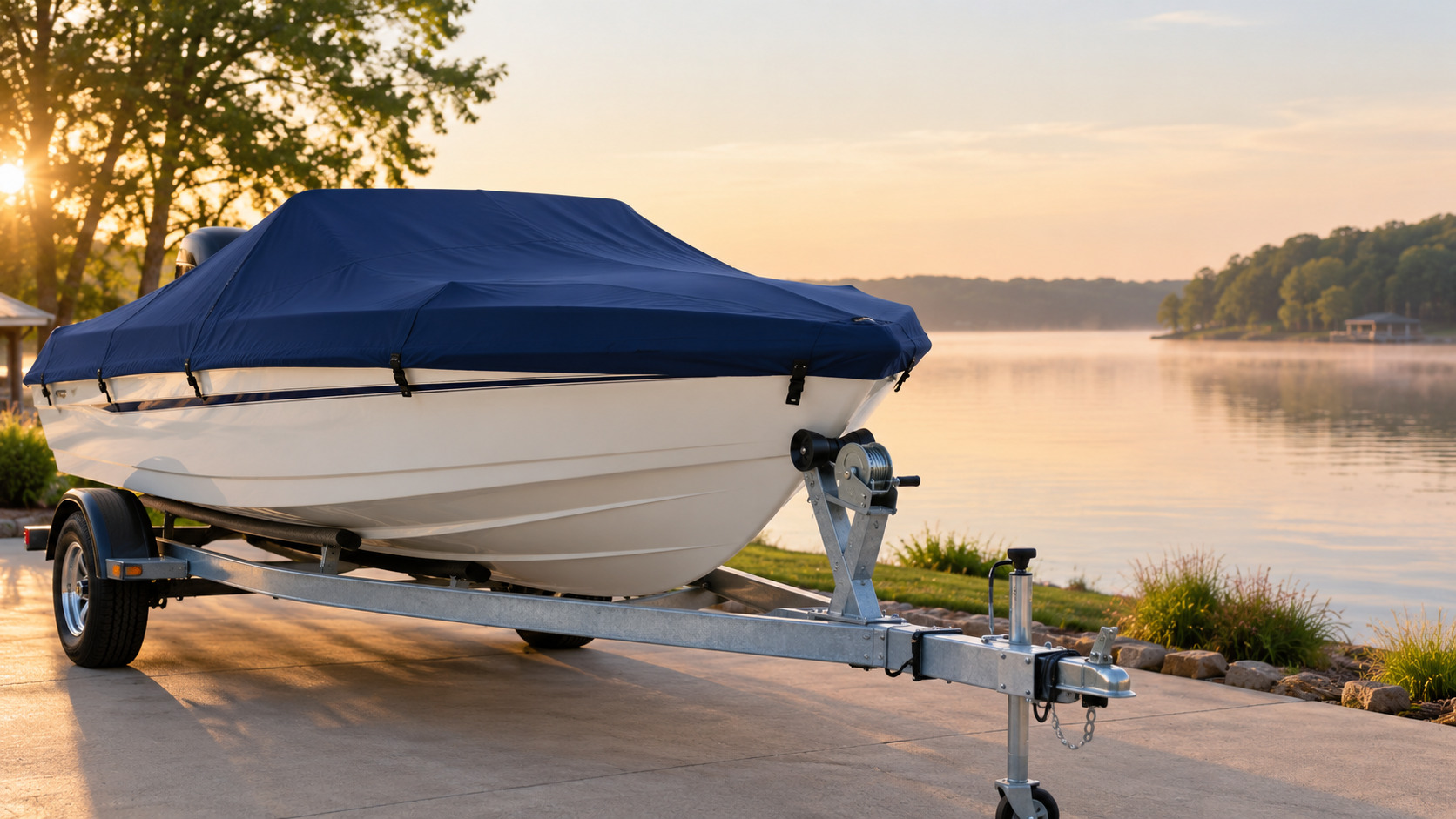
It happens at the start of almost every boating season. You pull back the cover and find a tear you don’t remember, a pool of water that sat all winter, or a faded patch that has gone thin as paper. Maybe you notice a musty smell, or the straps have stopped holding the way they used to.
Now comes the question every boat owner faces: is this worth fixing, or is it time for a new cover?
If you’ve been looking for boat covers in Oshawa, Ontario, this guide will help you answer that honestly. We’ll go through why covers wear out so quickly in our climate, the warning signs to watch for, how to decide between repair and replacement, and what to look for in a custom fit. We’ll also cover two things people often forget when they’re already thinking about their boat’s canvas: seat covers and carpet.
You don’t need to be an expert to make a good call. You just need to know what to look at.
Table of Contents
Why Boat Covers Take a Beating in Ontario
A boat cover has one of the hardest jobs on the water. It sits outdoors for months, sometimes all year, taking whatever the weather sends.
In Oshawa and across Durham Region, that means a full range of conditions. Summer brings strong UV light, which slowly breaks down fabric and thread. Spring and fall bring rain, wind and damp leaves. Winter brings snow, ice and freeze-and-thaw cycles that stress seams and fasteners. A cover that looks fine in June may be quietly weakening in places you can’t see.
Several things work against a cover over its life:
- Sun exposure. UV rays fade colour first, then weaken the fabric itself. Thread is often the first thing to give out.
- Pooling water and snow. Weight settles into low spots, stretches the material and eventually causes tears or leaks.
- Wind and flapping. A loose cover rubs against the hull, rails and windshield. That friction wears holes in surprisingly little time.
- Moisture and mildew. Trapped dampness leads to mildew, stains and odours, especially under a cover that doesn’t breathe or drain well.
- Trailering. Highway wind is far stronger than backyard wind. Straps, snaps and seams that are fine on a mooring or driveway can fail at speed.
Understanding these causes helps you spot problems early, and it helps you decide whether the cover itself is the problem or the way it’s being used.
Warning Signs Your Boat Cover Needs Attention
A boat cover rarely fails all at once. It gives you hints first. Here are the ones worth checking at the start and end of every season.
- Visible damage: tears, splits or small holes near corners, hardware and rub points; seams that have opened; frayed or chalky thread; missing snaps, broken zippers or loose straps.
- Fabric changes: faded, patchy or chalky colour; material that feels brittle or thin; water soaking in rather than running off.
- Fit problems: sagging in the middle where water collects, a cover that no longer pulls snug, or rub marks on your gelcoat or windshield.
- Moisture problems: mildew spots, a damp smell under the cover, or stains on seats and carpet.
If you notice only one or two of these, repair may be all you need. If several show up together, the cover is probably near the end of its life.
Boat Covers in Oshawa, Ontario: Repair or Replace?
This is the real question, and the answer usually comes down to how widespread the damage is and how well the cover still fits.
When repair makes sense
Repair is a good choice when the cover is still structurally sound and the damage is limited. Typical examples include:
- A tear or small hole in an otherwise healthy cover
- A seam that has started to open
- Worn or broken snaps, zippers, straps or grommets
- A section that has worn through where it rubs against a rail or windshield
In these cases, repairing a cover can extend its life by seasons at a fraction of the cost of a new one. Fixing a problem early also prevents it from spreading. A small tear that catches the wind will grow, and a loose seam will keep opening.
When replacement is the smarter move
Replacement makes more sense when the fabric itself has given up. Watch for:
- Widespread fading and brittleness. If the material is stiff, thin or chalky across large areas, patches won’t hold. New stitching into weak fabric tends to tear out again.
- Multiple failures at once. If seams, snaps and fabric are all in trouble, you’d be paying to repair several problems that will keep coming back.
- Poor fit that can’t be fixed. If the cover has stretched or shrunk, or if it never fit the boat properly, sagging and flapping will keep damaging both the cover and your boat.
- Leaks and mildew that keep returning. Once the waterproofing and breathability are gone, repairs usually can’t restore them.
A good rule of thumb: if repairing the cover would solve the problem for more than a season or two, repair it. If you’d be chasing new damage every few months, replace it.
An honest shop will tell you which side of that line your cover falls on, even if the answer means a smaller job. When you bring the cover in, lay it out flat if you can, or take clear photos of the damage, the seams and the areas where it fits poorly. That gives a trimmer far more to work with than a description alone.
Custom Boat Covers in Durham Region vs. Off-the-Shelf
If you do need a new cover, you have two broad options, and the difference is bigger than many people expect.
Off-the-shelf covers are made to fit a range of boat sizes and styles. They cost less up front and are fine for light use or short-term storage. The trade-off is fit. Even a good one will leave gaps, loose areas and low spots, and those are exactly where wind, water and wear do their damage.
Custom boat covers are made to your boat’s shape, including its windshield, rails, cleats, console and any accessories. Done well, a custom cover sits snug, sheds water better and flaps less, which is better for both the fabric and your boat’s finish.
Custom is usually worth considering if:
- You trailer your boat regularly and need a cover that stays put at highway speed
- Your boat has an unusual layout, a tower, a bimini or other add-ons
- You store the boat outdoors through the season
- You’ve already gone through a cheap cover and want something that lasts
Before you order, think about how you actually use the boat: on a trailer, in a driveway or at a marina, for storage, for travel or both. Ask about fabric choices, how the cover will be supported so water runs off rather than pools, and how it will be fastened for storage and for towing. Mark’s Auto Trim handles custom boat cover installation and repair, so you can talk through your specific boat and your storage setup. Details are on the boat upholstery and covers page.
Don’t Overlook Boat Seat Covers and Boat Carpet
If you’re already looking closely at your boat’s canvas, take a few minutes to check what’s underneath. A cover that has been leaking or sagging often leaves its mark below.
Boat seat covers in Oshawa, Ontario
Boat seats take a lot of abuse. Sun, spray, sunscreen, fishing gear and wet swimsuits all wear on vinyl and stitching. Signs it may be time to repair or re-cover your seats include:
- Cracked, peeling or sticky vinyl
- Split seams or loose stitching
- Flattened or waterlogged foam
- Mildew in the seams or on the underside
- Faded patches where the sun hits hardest
A torn seat left alone tends to get worse, and water that gets into the foam is harder to deal with than a simple seam repair. Catching it early keeps the repair small. If you’d like to see what’s possible, read more about boat upholstery and seat covers.
Boat carpet in Oshawa, Ontario
Boat carpet works hard too. It gets wet, dries, gets stepped on with sandy feet and holds on to moisture if it can’t drain. Look for:
- Mildew or a musty smell that cleaning doesn’t remove
- Fraying, lifting or loose edges
- Worn patches, especially around the helm and walkways
- Staining that has soaked into the backing
If you’re replacing carpet, ask how it will be fitted and whether any underlying problems, such as moisture trapped under the old carpet, need attention first. You can find more on the boat carpet page.
Doing the cover, seats and carpet together can also be more convenient than taking the boat in three separate times.
Practical Tips and Common Mistakes
Whether your cover is old or brand new, a few habits make a real difference.
Tips to help your boat cover last
- Support the cover so water can run off. A cover that sags collects water and snow. Poles or a support frame help keep it tight and shaped properly.
- Secure it properly. Use all the straps, snaps and tie-downs your cover is designed for. A loose cover flaps and wears quickly, especially when trailering.
- Pad rubbing points. Anywhere the cover touches a sharp edge, rail or windshield frame, extra padding or protection reduces friction.
- Keep it clean. Brush off leaves and debris, and use products made for marine fabric, since harsh cleaners can damage coatings and stitching.
- Let everything dry before storing. A damp cover put away is a mildew problem waiting to happen.
- Check it at the start and end of the season. A close look at seams, snaps and rub points catches small problems before they grow.
- Fix small tears right away. A small repair now is almost always easier than a large one later.
Common mistakes to avoid
Putting a cover on a wet boat. Trapped moisture is how mildew starts. Let the boat dry first when you can.
Letting the cover sag. Low spots collect water and snow. The extra weight stretches the fabric and pulls on seams.
Skipping the tie-downs. Wind gets under a loose cover and whips it against the boat. That damages the cover, and it can scratch your boat’s finish too.
Buying on price alone. A cheaper cover that doesn’t fit properly can wear out in a season or two. Fit, fabric and construction matter as much as the price tag.
Waiting until launch day. Repairs and custom work take time. If you wait until the boat is due in the water, you may be rushed into a decision. Checking your cover in the off-season gives you more options.
How to Choose a Shop for Boat Covers in Oshawa, Ontario
A good shop makes the decision simpler. When you’re comparing options, here are the questions worth asking.
- Do you do custom boat covers and repairs? Not every upholstery shop works on marine canvas. Experience with boats matters.
- Can I see examples of past work? Photos of finished covers, seats and carpet tell you a lot.
- What fabric options do you offer, and how do they suit my boat and storage? The right material depends on how and where you use the boat.
- Will you tell me honestly whether to repair or replace? The right advice isn’t always the biggest job.
- What does the quote include? Ask about materials, labour, fit adjustments and anything that might change the price.
- How long will it take? Especially important before launch season.
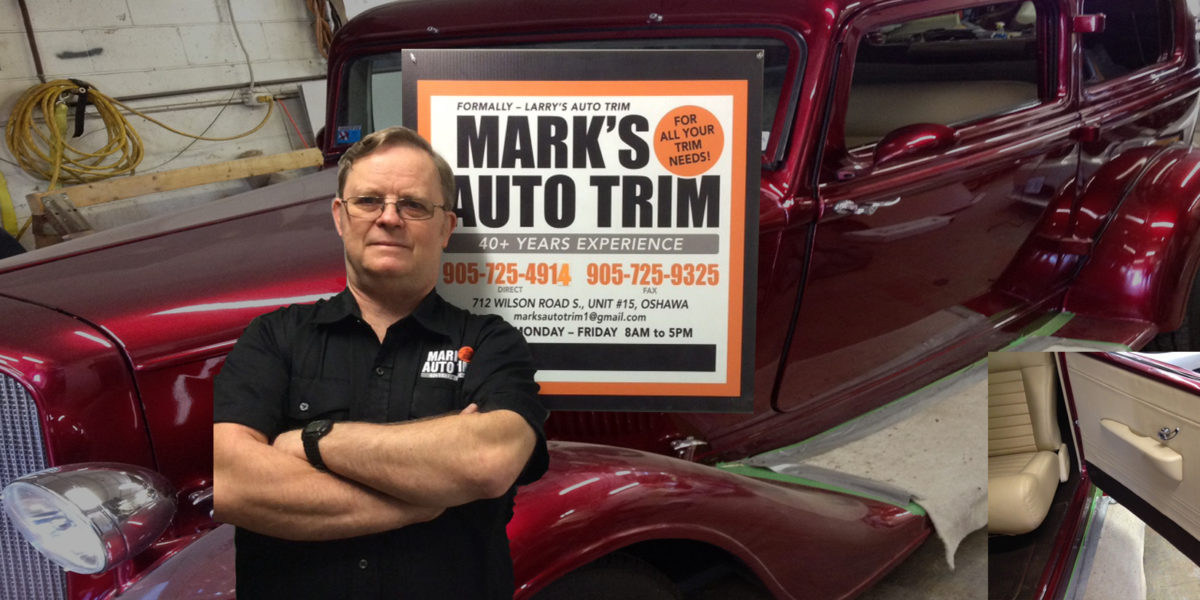
Mark’s Auto Trim has more than 40 years of experience with boat, car, motorcycle and convertible-top upholstery. The shop serves Oshawa, Durham Region and the Greater Toronto Area, and handles marine work including boat covers, seat covers, carpet, tops, and bow and tonneau covers. You’ll find the shop at 712 Wilson Road South, Unit 15, Oshawa, Ontario L1H 8R3, open Monday to Friday, 8:00 AM to 5:00 PM.
Call 905-725-4914 to describe your boat and the work you need. If you’d rather start online, use the contact page, or learn more about the shop before you call.
Frequently Asked Questions
How do I know if my boat cover needs repair or replacement? Look at the fabric, seams and fit. Isolated tears, loose seams and worn hardware can often be repaired. Widespread fading, brittleness, repeated leaks or poor fit usually point to replacement.
Can a torn boat cover be repaired? Often, yes. Tears, split seams and worn hardware are common repairs. If the surrounding fabric is brittle or thin, though, a patch may not last. Bring the cover in or send photos so a trimmer can tell you what’s realistic.
What’s the difference between a custom boat cover and a universal one? A custom cover is made to your boat’s specific shape and features, so it fits closer, sheds water better and flaps less. A universal cover costs less but leaves loose areas where wear tends to start.
Can I get boat seat covers and boat carpet done at the same time as my cover? Yes. Mark’s Auto Trim works on boat covers, seat upholstery and boat carpet, and combining jobs can save you a trip. Call 905-725-4914 to discuss what your boat needs.
How much do boat covers cost in Oshawa? Price depends on the size and type of boat, the style of cover, the fabric and whether it’s a repair or a new custom cover. The most accurate way to get a figure is to talk through your boat with the shop. Call Mark’s Auto Trim at 905-725-4914.
Conclusion
A boat cover protects one of the biggest investments many people make, and in Oshawa’s weather it earns its keep. The good news is that most problems announce themselves early. Tears, loose seams, sagging, fading and mildew all tell you something, and acting on them sooner keeps repairs small.
If the damage is limited and the fabric is still sound, repair is often the practical answer. If the cover is thin, faded, leaking or poorly fitted, replacement, ideally with a custom fit, will serve you better. And while you’re at it, take a look at your seats and carpet, since the cover isn’t the only thing that works hard on a boat.
For boat covers in Oshawa, Ontario, Mark’s Auto Trim can look at your cover, tell you honestly what it needs and help you plan the work before the season gets busy. Call 905-725-4914 or visit the contact page to get started.